Poha is more than a breakfast dish in India it is a morning ritual repeated in millions of kitchens every single day, from the bustling street stalls of Indore to quiet family homes in Maharashtra, Gujarat and Punjab. Yet the moment you walk into a grocery store or open a shopping app, you are met with dozens of packets, each one claiming to be the best poha in India. So how do you actually separate a genuinely good, hygienically made, premium quality poha from an ordinary sack of flattened rice with a fancy label?
This guide breaks the question down properly. You will learn exactly what to look for in the best poha brand in India, how a best poha manufacturing unit actually processes flattened rice, what a fair best poha price looks like in 2026, and how to tell a trustworthy best poha seller from one that is simply repackaging low-grade stock. Along the way, we will also show you where a brand like Health Mark Poha fits into this picture, and how to reach a reliable top poha supplier if you are buying for a business, hotel, or bulk requirement.
What Is Poha, and Why Has It Become India’s Everyday Staple?
Poha, also called flattened rice or beaten rice, is made by parboiling paddy, roasting it lightly and then flattening the softened grains between heavy rollers until they become thin, light flakes. The process pre-cooks the rice, which is exactly why poha needs almost no cooking time at home a quick rinse and a few minutes on the stove is all it takes.
Different regions of India have made poha their own. Indore is famous for its tangy, sev-topped Indori poha. Maharashtra loves a simple kanda poha tempered with mustard seeds, curry leaves and onions. In Bengal, a similar preparation is known as chirer pulao, and in Gujarat you will often find poha made slightly sweeter with a touch of sugar. This versatility, combined with the fact that poha is light on the stomach, quick to prepare, and naturally gluten-free, is exactly why it has stayed a breakfast favourite across generations.
Because poha is consumed so widely, the market is now crowded with regional mills, unbranded wholesale suppliers, and organised FMCG brands which is precisely why the question of who makes the best poha in India matters more than it used to.
How to Identify the Best Poha Brand in India A Buyer’s Checklist
Not all poha is created equal. Before you decide which company’s poha deserves a place in your kitchen or your business supply chain, run it through this checklist:
• Grain quality: Good poha is made from properly aged rice, not freshly harvested paddy. Aged rice flattens more evenly and holds its shape after cooking.
• Thickness grading: Poha comes in thin, medium and thick varieties. Thin poha suits instant preparations, while thick poha is preferred for dishes like kanda poha that need to hold texture after soaking.
• Colour and appearance: Genuine, well-processed poha has a natural off-white to pale ivory colour. Unusually bright white flakes can indicate excessive bleaching or polishing.
• Aroma and freshness: Fresh poha should smell mild and neutral. A musty or stale smell is a sign of poor storage or an old batch.
• Minimal broken grains and dust: A higher proportion of broken flakes or fine powder at the bottom of the pack usually points to lower processing standards.
• Hygienic, moisture-proof packaging: Poha absorbs moisture easily, so packaging quality directly affects shelf life and crispness.
• Certifications and traceability: Look for FSSAI registration and a brand that is transparent about its sourcing and manufacturing process.
A brand that consistently checks each of these boxes is generally a safer, more reliable choice than an unbranded, loose-sold alternative regardless of how the packaging looks on a shelf.
What Makes ‘Premium Quality Poha’ Different From Ordinary Poha?
The phrase premium quality poha gets used loosely by many sellers, so it helps to know what it should actually mean in practice. True premium poha starts with better raw paddy selection, moves through a controlled parboiling and flattening process, and ends with strict quality checks before packing. The result is a product with:
• A more uniform flake size and thickness
• Fewer broken grains and almost no husk or debris
• A lighter, softer texture that cooks evenly and doesn’t turn mushy
• Better retention of natural aroma and taste
• Longer shelf life due to controlled moisture content and hygienic packing
This is also where the difference between a best poha seller and a genuine best poha manufacturing company becomes important a seller may simply repackage whatever stock is cheapest, while a manufacturer that controls its own production line has far more accountability over quality from paddy to packet.
Inside Best Poha Manufacturing What Actually Happens Before It Reaches Your Kitchen
Understanding the manufacturing process makes it much easier to judge quality when you’re standing in front of a shelf full of options. A well-run poha manufacturing facility typically follows these stages:
1. Paddy selection and cleaning: Good quality paddy is selected and cleaned to remove stones, husk and foreign matter.
2. Soaking: The paddy is soaked in water to soften the grain and prepare it for parboiling.
3. Parboiling: Controlled steaming partially cooks the rice, which helps retain nutrients and improves flake quality.
4. Roasting: The parboiled rice is roasted, which drives off excess moisture and makes the grain pliable enough to flatten.
5. Flattening (flaking): Heavy rollers press the roasted grains into thin flakes this is the step that gives poha its signature flat shape.
6. Drying and grading: The flakes are dried to the correct moisture level and sieved into thickness grades.
7. Quality checks: Batches are checked for colour, broken grain percentage, moisture, and cleanliness.
8. Hygienic packaging: The final product is packed in moisture-resistant material under hygienic, controlled conditions to preserve freshness.
Brands that invest in every one of these steps rather than cutting corners on drying or skipping quality checks are the ones that consistently earn a reputation as a top poha supplier rather than just another name on a shelf.
Nutritional Benefits of Poha Why It’s Recommended as a Healthy Breakfast
Poha’s popularity isn’t just about taste and convenience it also has a genuinely useful nutritional profile for a morning meal. As a rough reference, 100 grams of plain flattened rice provides roughly 350 kcal of energy, around 80g of carbohydrate, close to 6-7g of protein and under 1-1.5g of fat, though exact values vary slightly by brand and processing method, so it’s always worth checking the pack for precise figures.
• Light and easy to digest, making it suitable even for people recovering from illness
• A quick source of carbohydrate-based energy to start the day
• Naturally low in fat when prepared without excess oil
• Naturally gluten-free, which suits people avoiding wheat-based breakfasts
• Highly versatile easy to load up with vegetables, peanuts and sprouts for added fibre and protein
Because poha is parboiled rather than deep-processed, it also tends to sit lighter on the stomach compared to heavier fried breakfast options one more reason dietitians frequently recommend it as part of a balanced Indian breakfast.
Best Poha Price in India What Should You Actually Pay?
Poha pricing in India varies quite a bit depending on grade, brand, packaging and quantity. Based on current wholesale and retail listings, standard white poha typically trades somewhere in the range of roughly ₹30 to ₹60 per kilogram, while specialty or organic variants (millet poha, brown poha, red poha) can run higher, often between ₹60 and ₹90 per kilogram. Branded, hygienically packed poha in smaller retail packs (80g-500g) is usually priced a little above loose or unbranded poha of the same weight, and that premium is generally justified by better quality control, cleaner processing and longer shelf life.
When comparing the best poha price across sellers, don’t just look at the number on the pack divide it out to a per-kilogram cost, and weigh that against the quality checklist from Section 2. A slightly higher price for consistently clean, well-processed, hygienically packed poha is usually better value than the cheapest option on the shelf.
Health Mark Poha A Trusted Name Among India’s Best Poha Sellers
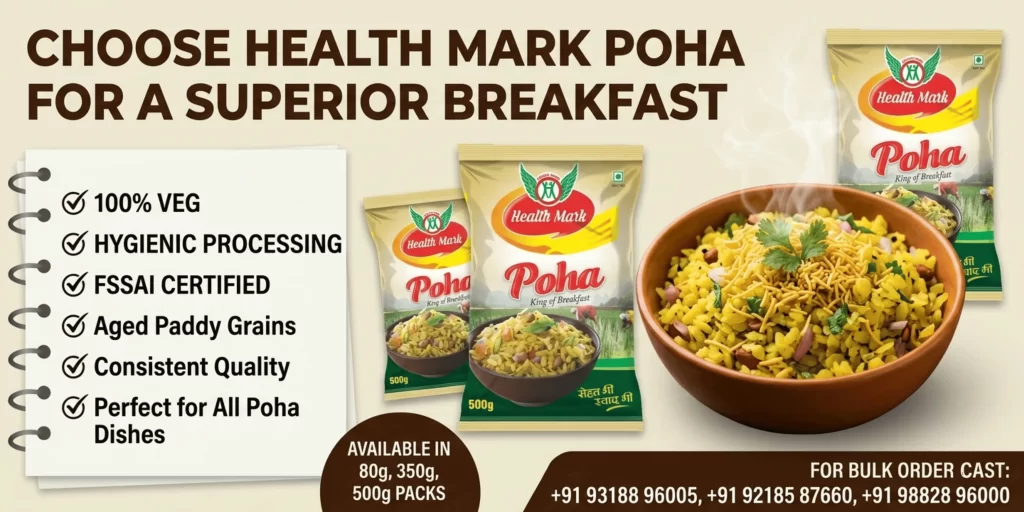
If you’re looking for a brand that ticks the boxes covered above, Health Mark is worth a close look. Health Mark Poha is made from premium quality flattened rice, offering a light texture and authentic taste that cooks quickly and absorbs flavours well whether you’re making a simple kanda poha or a more elaborate Indori-style version.
A few things stand out about Health Mark’s approach to poha:
• Hygienic processing: The poha is processed and packed under hygienic conditions to help maintain freshness and quality from factory to kitchen.
• Multiple pack sizes: Available in 80gm, 350gm and 500gm packs, making it easy to buy the right quantity whether it’s for a small household or a larger family.
• Part of a wider trusted range: Health Mark Poha sits within the brand’s broader Snacks category, alongside other everyday essentials, reflecting the same quality-first approach across its FMCG product line.
• Focus on sourcing and traceability: Health Mark positions itself around clean, carefully sourced ingredients and transparency through its supply chain, which matters for anyone who wants to know exactly what’s going into their morning meal.
For home cooks, this combination of quick-cooking texture and hygienic packaging makes Health Mark Poha a practical everyday choice. For retailers, distributors, hotels and caterers, Health Mark can also be approached directly as a top poha supplier for bulk requirements more on that in Section 11.
How to Cook Perfect Poha at Home A Simple Step-by-Step Method
Even the best poha brand in India can turn out mushy or bland if it isn’t cooked correctly. Here’s a simple, reliable method for classic kanda (onion) poha:
Take the required quantity of poha in a colander and rinse it briefly under running water do not soak it, just a quick rinse is enough. Set aside for 4-5 minutes to soften.
Heat 2 tablespoons of oil in a pan. Add mustard seeds and let them splutter, then add curry leaves, chopped green chillies and a pinch of asafoetida
Add finely chopped onions and sauté until translucent. If you like, add a handful of raw peanuts at this stage and cook until lightly golden.
Add turmeric powder and salt, then add the softened poha. Mix gently so the flakes don’t break.
Cover and cook on low heat for 2-3 minutes so the flavours combine and the poha heats through evenly.
Finish with a squeeze of fresh lemon juice, chopped coriander leaves, and a sprinkle of sev if you like it Indori-style. Serve hot.
The single most important step is the rinse-and-rest stage: over-soaking is the number one reason poha turns pasty and clumped instead of light and fluffy.
Common Mistakes People Make When Buying or Cooking Poha
• Buying the cheapest option without checking grain quality: The lowest price per kilogram often comes with more broken grains, dust, and inconsistent flake thickness.
• Soaking poha in water instead of rinsing it: This is the most common cooking mistake and leads to soggy, sticky poha.
• Ignoring the pack date or storage conditions: Poha absorbs moisture and odours easily, so poor storage even of a good brand can ruin the texture before you even open the pack.
• Not matching the thickness grade to the recipe: Thin poha in a dish meant for thick poha (or vice versa) changes the final texture significantly.
• Overlooking certification: Skipping FSSAI details or hygiene information on the pack means you’re trusting the brand blindly rather than verifying it.
Best Poha Seller vs Best Poha Manufacturer What’s the Difference?
These two terms are often used interchangeably, but they mean different things, and understanding the difference helps you buy smarter:
| Aspect | Poha Seller / Trader | Poha Manufacturer / Brand |
| Control over quality | Limited depends on whichever supplier they source from | Full control from paddy sourcing to final packaging |
| Consistency across batches | Can vary widely between purchases | Generally more consistent due to standardised processing |
| Accountability | Harder to trace issues back to source | Easier to trace and address quality issues directly |
| Certifications | May or may not be verifiable | Typically maintains FSSAI and hygiene documentation |
| Best suited for | Small, one-off, or hyper-local purchases | Regular household use and bulk / business supply |
If you’re buying poha regularly for your household or for a business leaning toward an established best poha manufacturing brand rather than an unverified trader generally gives you more consistency and accountability.
How to Choose the Best Poha Supplier for Bulk or Business Needs
Restaurants, caterers, hotels, hostels, and retail distributors buying poha in bulk have slightly different priorities compared to a home cook picking up a single pack. When evaluating a top poha supplier for business needs, consider:
• Consistent bulk supply capability: Can the supplier reliably deliver the same quality at scale, order after order?
• Packaging options: Does the supplier offer packaging sizes that suit your operation, from smaller retail packs to larger bulk quantities?
• Hygiene and certification standards: Bulk buyers should always ask for FSSAI details and manufacturing hygiene practices before finalising a supplier.
• Direct communication with the manufacturer: Working directly with a manufacturer rather than a middleman usually means better pricing and faster resolution of any quality concerns.
Poha Buying Options Compared Branded vs Loose vs Local Mill
Here’s a quick side-by-side comparison to help you decide which type of poha purchase suits your situation:
| Criteria | Premium Branded Poha | Loose / Unbranded Poha | Local Mill (Direct) |
| Hygiene & packaging | High sealed, moisture-proof | Variable often open sacks | Depends entirely on the mill |
| Consistency | Very consistent batch to batch | Can vary significantly | Usually consistent if you know the mill |
| Certification (FSSAI etc.) | Usually available | Rarely verifiable | Sometimes available on request |
| Price per kg | Slightly higher | Generally lowest | Low to moderate |
| Shelf life | Longer, due to controlled packing | Shorter if stored poorly | Depends on storage |
| Best for | Regular household & gifting use | Occasional, price-sensitive buying | Bulk buyers near the mill |
FAQ
1. Which company’s poha is considered the best in India?
There isn’t a single universally ‘official’ best it depends on your priorities. The most reliable way to judge is by checking grain quality, hygiene standards, certification (like FSSAI), and consistency across purchases. Brands such as Health Mark focus specifically on premium quality flattened rice with hygienic processing and packaging, which are the exact factors worth prioritising when choosing a poha brand.
2. What is the difference between thick poha and thin poha?
Thick poha holds its shape better after rinsing and is preferred for dishes like kanda poha, while thin poha cooks almost instantly and works well in lighter, quicker preparations. Neither is objectively ‘better’ the right choice depends on the recipe.
3. Is poha a healthy breakfast option?
Yes. Poha is light, easy to digest, naturally gluten-free, and provides quick carbohydrate energy. When prepared with vegetables, peanuts or sprouts and minimal oil, it becomes an even more balanced breakfast choice.
4. What is a fair price for poha in India?
Standard poha generally trades between roughly ₹30 and ₹60 per kilogram, while specialty or organic variants can go higher, often ₹60-₹90 per kilogram. Branded, hygienically packed poha in smaller retail packs is usually priced a little above loose poha of the same weight, reflecting better quality control.
5. How can I tell if poha is fresh and good quality?
Check for a natural off-white colour (not overly bleached), a mild neutral smell, minimal broken grains or dust at the bottom of the pack, and moisture-proof packaging. Certification details like FSSAI registration are also a good trust signal.
6. Should I buy poha loose or from a packaged brand?
For occasional, price-sensitive purchases, loose poha from a trusted local seller can work fine. For regular household use or when consistency and hygiene matter more, a packaged brand with proper certification and sealed packaging is generally the safer choice.
7. Where can I buy Health Mark Poha online?
You can view product details and place an enquiry directly on the Health Mark Poha product page, or browse the full Snacks category for related items.
8. Does poha need to be soaked in water before cooking?
No poha should only be rinsed briefly under running water and then left to rest for a few minutes, not soaked. Soaking it in water is the most common mistake that leads to soggy, mushy poha.
9. Is poha suitable for weight-conscious diets?
Poha can fit into a weight-conscious diet when prepared with minimal oil and paired with vegetables or sprouts for added fibre and protein, since it is naturally low in fat compared to many fried breakfast alternatives. As with any food, portion size and preparation method matter.
10. How do I contact a poha manufacturer for bulk or wholesale orders?
If you need bulk quantities for a business, restaurant, or retail requirement, you can contact Health Mark’s sales team directly at +91 70825 72823, +91 92185 87660, or +91 98828 96000, or submit an enquiry through the product page.
Conclusion Making the Right Poha Choice
There’s no single ‘official’ answer to which company’s poha is best in India but there is a clear, repeatable framework for judging quality: check the grain, check the processing, check the certification, and check how transparent the brand is about its sourcing. Apply that checklist consistently, and you’ll spend less time guessing and more time enjoying a genuinely good bowl of poha.
If you’re looking for a brand built around premium quality flattened rice, hygienic processing, and reliable pack sizes, explore Health Mark Poha or browse the wider Snacks range today. For bulk orders, business enquiries, or questions about sourcing, reach the Health Mark team directly at +91 70825 72823, +91 92185 87660, or +91 98828 96000.