
Open any spice rack in an Indian kitchen and you will almost certainly find a tin, pouch, or jar labelled garam masala. It is the one blend that home cooks reach for without thinking twice a spoonful into dal, a pinch over sabzi, a generous scoop into a Sunday mutton curry. Yet ask ten people which brand garam masala is best, and you will get ten different answers, most of them based on habit rather than a clear understanding of what actually makes one blend better than another.

This guide breaks that habit. Instead of simply naming a winner, we will walk through the ingredients, processing methods, and quality markers that genuinely separate a premium garam masala from an average one so that the next time you buy garam masala, you are choosing with your eyes open, not just your memory of what your mother used.
Along the way, we will also look at how a growing spice manufacturer like Health Mark fits into this picture, what makes its garam masala worth considering, and how you can buy it directly if you decide to make the switch.
Why ‘Which Brand Garam Masala Is Best’ Isn’t a One-Word Answer
Garam masala is not a single, standardised recipe. Unlike turmeric powder, which is essentially one ingredient ground fine, garam masala is a blend typically built from cinnamon, cardamom, cloves, black pepper, cumin, coriander, bay leaf, and sometimes nutmeg or mace, in ratios that vary by region, household, and manufacturer. That means ‘best’ depends on a few things:
• Regional taste a Punjabi garam masala tends to be warmer and heavier on cloves and cinnamon, while a South Indian blend leans more on pepper and coriander.
• Intended use a blend built for biryani will behave differently in a simple dal tadka.
• Freshness and sourcing two brands can use identical ingredients on paper and still produce very different results, purely based on how fresh the spices were when ground.
• Manufacturing standards hygiene, grinding technology, and packaging all affect shelf life and aroma retention.
So instead of chasing a single ‘best garam masala brand in India‘ label, the smarter approach is learning to recognise the markers of quality yourself. Once you know what to look for, comparing any two packets on a shelf or on a website becomes far easier.
What Actually Goes Into a Good Garam Masala
A well-made garam masala usually strikes a balance between ‘warming’ spices (cinnamon, cloves, black pepper) and ‘grounding’ spices (cumin, coriander). The exact composition varies, but a premium quality garam masala will typically include:
• Whole spices sourced fresh, rather than pre-ground powders bought in bulk and blended later
• No fillers such as rice flour, starch, or husk to bulk up weight
• No artificial colour to fake a ‘rich’ brown shade
• A balance of aromatic spices (cardamom, cinnamon, cloves) with earthy ones (cumin, coriander, black pepper)
• Controlled roasting before grinding, which develops flavour without burning the essential oils
7 Signs You’re Looking at a Genuinely Premium Blend
Marketing language on packaging can say almost anything. These seven signs are harder to fake, which is why they matter more than the word ‘premium’ printed on the front of a pack.
1. Strong, layered aroma you should be able to distinguish cinnamon, clove, and cardamom notes separately, not just a generic ‘spicy’ smell.
2. Rich, even colour a consistent reddish-brown shade from batch to batch, without patches of pale powder.
3. Fine, uniform texture no visible husk, stalk fragments, or gritty filler.
4. Airtight, well-sealed packaging moisture is the single biggest enemy of ground spice; a properly sealed pack protects flavour for months.
5. Transparent labelling the manufacturer’s name, address, FSSAI licence number, and batch details are clearly printed.
6. Balanced flavour in cooking it should deepen a dish’s flavour, not dominate it or leave a bitter aftertaste.
7. Consistent repeat quality the pack you buy this month should taste the same as the one you bought three months ago.
Common Mistakes People Make When Buying Garam Masala
Even careful home cooks fall into a few predictable traps when choosing a spice blend:
• Buying on price alone the cheapest pack often uses fillers or older stock to hit a lower price point.
• Ignoring the manufacturing date garam masala loses aroma over time; a pack sitting on a shelf for a year will never taste as good as a freshly ground one.
• Assuming ‘premium’ packaging equals premium quality attractive packaging says nothing about what is inside.
• Sticking with a brand purely out of habit, without occasionally comparing it against fresher alternatives.
• Storing it incorrectly at home even the best garam masala loses potency quickly in a humid kitchen or an unsealed container near the stove.
How to Compare Garam Masala Brands: A Practical Checklist
Whenever you are deciding between two or three options whether in a local store or while trying to buy garam masala run through this short checklist:
Check the ingredient list. Shorter, recognisable spice names are a good sign; long lists with ‘flavouring’ or ‘anti-caking agent’ are not.
Look for a manufacturing and best-before date, not just a vague shelf-life claim.
Smell it before buying, if possible, or read verified customer reviews that mention aroma specifically.
Compare price per 100g rather than pack price, since pack sizes vary widely between brands.
Check whether the seller offers both retail and bulk options a manufacturer confident enough to sell wholesale usually maintains tighter quality control.
See if the brand is transparent about its manufacturing location and process, rather than hiding behind generic marketing claims.
Average vs Premium Garam Masala: A Side-by-Side Comparison
Here is a simple way to visualise the difference between an average, mass-produced blend and a genuinely premium quality garam masala:
| Quality Marker | Average / Low-Cost Garam Masala | Premium, Best-Selling Garam Masala |
| Ingredients | Fillers, husk, or low-grade offcuts mixed in | Whole, high-grade spices with no fillers |
| Aroma | Flat or faint after a few weeks | Strong, warm fragrance that lasts through storage |
| Colour | Dull, pale, or uneven from batch to batch | Rich, consistent brown from batch to batch |
| Grinding | Old-stock or bulk-ground months in advance | Freshly ground and quickly packed to lock in oils |
| Packaging | Loose or poorly sealed, exposed to air and moisture | Airtight, hygienically sealed packaging |
| Labelling | Vague or missing sourcing and manufacturing details | Clear labelling with manufacturer details and batch info |
| Taste in Cooking | Overpowering or inconsistent flavour | Balanced flavour that complements, not overwhelms, a dish |
| Price vs Value | Cheaper upfront, but you use more per dish | Fair price for the quantity of authentic flavour delivered |
Why Health Mark Is Building Trust as a Garam Masala Brand in India
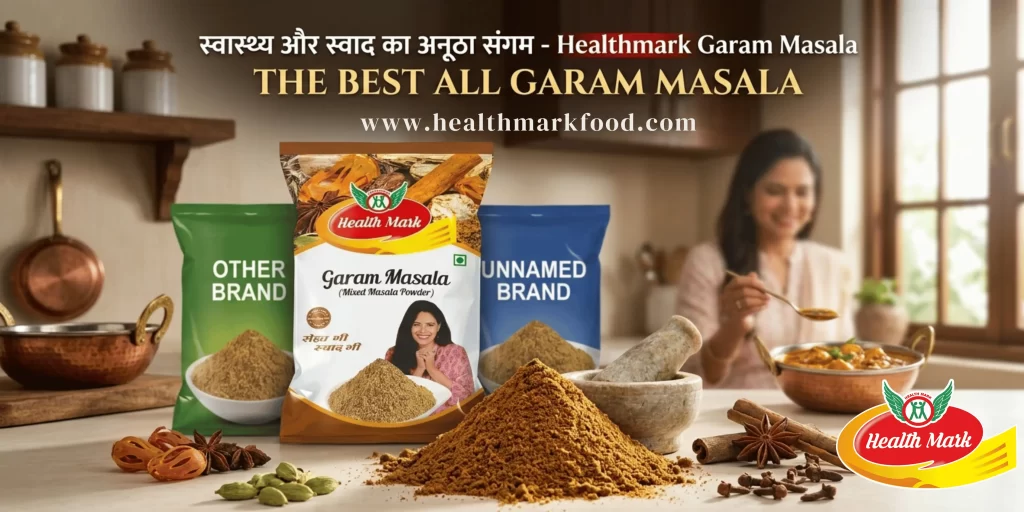
Health Mark is a Himachal Pradesh-based food manufacturer with a growing footprint across Punjab, Haryana, Chandigarh, and other parts of North India. Alongside staples like atta, besan, pulses, and dry fruits, the brand’s spice range includes garam masala, turmeric powder, red chilli powder, coriander powder, and speciality blends such as chana masala and meat masala.
A few things stand out about how Health Mark approaches its garam masala:
• Sourcing of high-grade whole spices, rather than relying on pre-ground bulk powder, to keep flavour and aroma closer to fresh-ground standards.
• Production under controlled hygiene conditions, aimed at consistency across batches rather than one good pack followed by an inconsistent one.
• Airtight, hygienically sealed packaging designed to protect the blend from moisture and air during storage and transport.
• A blend profile suited to everyday North Indian cooking paneer curries, dal tadka, chicken gravies, and biryani where garam masala needs to add warmth without overpowering other ingredients.
• Pricing positioned for both households and businesses, with retail packs alongside wholesale and bulk options for retailers, halwais, and distributors.
For anyone specifically searching for a best health mark garam masala option, the brand’s garam masala is available directly through its website along with its full spice range, making it straightforward to compare against whatever you are currently using.
Buy Health Mark Garam Masala: https://healthmarkfood.com/product/garam-masala/
Browse the Full Spices Range: https://healthmarkfood.com/product-category/spices/
Explore All Health Mark Products: https://healthmarkfood.com/
How to Use Garam Masala the Right Way
Even the best garam masala can underdeliver if it is used incorrectly. A few practical habits make a noticeable difference:
• Add it towards the end of cooking, not at the start prolonged high heat burns off the aromatic oils that give it character.
• Use it sparingly at first. A well-balanced blend is concentrated; you can always add more, but you cannot easily fix an overpowered dish.
• Pair it with fresh ingredients good garam masala works best alongside fresh ginger-garlic paste, ripe tomatoes, and quality cooking oil, rather than trying to compensate for stale ingredients.
• Store it in an airtight container, away from direct sunlight and steam from the stove, to preserve its aroma for longer.
• Avoid dipping a wet spoon into the container moisture is the fastest way to spoil a spice blend and encourage clumping.
Garam Masala Price: What You Should Actually Be Paying
Garam masala price varies based on ingredient quality, pack size, and whether you are buying retail or wholesale. As a rough guide:
• Budget blends with fillers tend to sit at the lowest price point but require larger quantities per dish to achieve the same flavour, which erodes the apparent saving.
• Mid-range, well-sourced blends offer the best balance of price and performance for most households.
• Premium, small-batch blends cost more per 100g but typically go further because a smaller quantity delivers a stronger, more balanced flavour.
Rather than comparing pack price alone, it is worth calculating cost per 100g and factoring in how much you actually use per dish. A slightly higher garam masala price for a genuinely premium blend often works out cheaper in practice, simply because you need less of it.
Where and How to Buy Garam Masala Online
If you have decided to buy garam masala powder online rather than picking up whatever is available at the nearest store, keep these points in mind:
Buy directly from the manufacturer’s official website where possible this reduces the risk of counterfeit or old stock sometimes found on third-party marketplaces.
Check for clear product photos, ingredient lists, and manufacturing details on the product page.
Look for a seller that also offers bulk or wholesale options, which usually signals a manufacturer confident in consistent quality at scale.
Read the return and freshness policy before ordering, especially for a perishable product like ground spice.
If you run a restaurant, catering business, or retail store, reach out directly to discuss bulk pricing rather than ordering multiple small retail packs.
Health Mark’s garam masala and full spice range can be ordered directly through its official website, with both retail and bulk/wholesale options available for households, retailers, and distributors.
Contact Health Mark: 09318896005 · 9218587660 · 9882896000
FAQ
What is the best garam masala brand in India?
The best garam masala brand ultimately depends on your regional taste and cooking style, but the strongest indicators of quality are freshness, whole-spice sourcing, absence of fillers, and airtight packaging. Brands like Health Mark that emphasise these standards, alongside consistent batch quality, are worth considering alongside whatever you currently use.
How can I tell if a garam masala is high quality just by looking at the packet?
Check for a rich, even brown colour, a clear manufacturing and best-before date, transparent labelling with the manufacturer’s details, and airtight sealing. A strong aroma when the pack is opened is one of the most reliable indicators.
Is more expensive garam masala always better?
Not necessarily, but price often reflects ingredient quality and freshness. The better comparison is cost per 100g combined with how much you need per dish a pricier, more concentrated blend can work out more economical than a cheap one you have to use twice as much of.
How long does garam masala stay fresh after opening?
Most good-quality garam masala retains strong aroma and flavour for around 3 to 6 months after opening if stored in an airtight container away from heat and moisture. Whole spice blends ground fresh in smaller batches tend to last longer in flavour than bulk-ground stock.
Can garam masala go bad?
It does not typically spoil in the way fresh food does, but it loses potency and can develop a musty smell if exposed to moisture or stored too long. If the aroma is faint or it smells stale, it is best replaced.
What is the difference between garam masala and curry powder?
Garam masala is a warming, aromatic blend used mainly in North Indian cooking, added often towards the end of cooking. Curry powder is a broader term, often associated with Western interpretations of Indian spice blends, and usually includes turmeric for colour, which garam masala typically does not.
Does Health Mark sell garam masala in bulk for businesses?
Yes. Alongside retail packs for households, Health Mark offers wholesale and bulk options for retailers, halwais, restaurants, and distributors. You can contact the brand directly at 09318896005, 9218587660, or 9882896000 to discuss bulk pricing.
Where can I buy Health Mark garam masala online?
Health Mark garam masala can be purchased directly through the brand’s official product page, along with its full range of spices, atta, besan, pulses, and other food essentials.
Is garam masala good for digestion?
Several of the spices commonly used in garam masala, such as cumin, black pepper, and cloves, are traditionally associated with supporting digestion when used in moderate, everyday cooking quantities. It is a flavour enhancer first, though, not a substitute for medical advice on digestive health.
How much garam masala should I use in a dish?
As a general starting point, a quarter to half a teaspoon per serving is enough for most curries and dals, added near the end of cooking. Because well-made blends are concentrated, it is easier to add more than to correct an overpowered dish.
Final Word
There is no single, universally ‘correct’ answer to which brand garam masala is best but there is a reliable way to find the right one for your kitchen. Look past the packaging and marketing claims, check for whole-spice sourcing, freshness, transparent labelling, and airtight packaging, and judge the blend on aroma and balance rather than price alone.
If you are currently comparing options, Health Mark’s garam masala is built around exactly these standards high-grade whole spices, controlled hygienic processing, and sealed packaging designed to protect flavour from factory to kitchen. It is available in both retail and bulk quantities, making it a practical option whether you are cooking for a family or supplying a business.