
Ask ten home cooks which besan is best for dhokla, and you will get ten different answers a family favourite, a brand their mother swore by, or simply whatever the local kirana store had in stock that week. But dhokla is an unforgiving dish. Get the besan wrong, and instead of a soft, spongy, melt-in-the-mouth snack, you end up with something flat, dense, or gritty no amount of eno or steaming time can fix that.
The truth is, dhokla’s texture depends far more on the quality and fineness of your gram flour than most recipes let on. A coarse, stale, or adulterated besan will sabotage even a perfectly balanced batter, while the right besan fresh, finely milled, and made from good chana dal does most of the heavy lifting on its own.
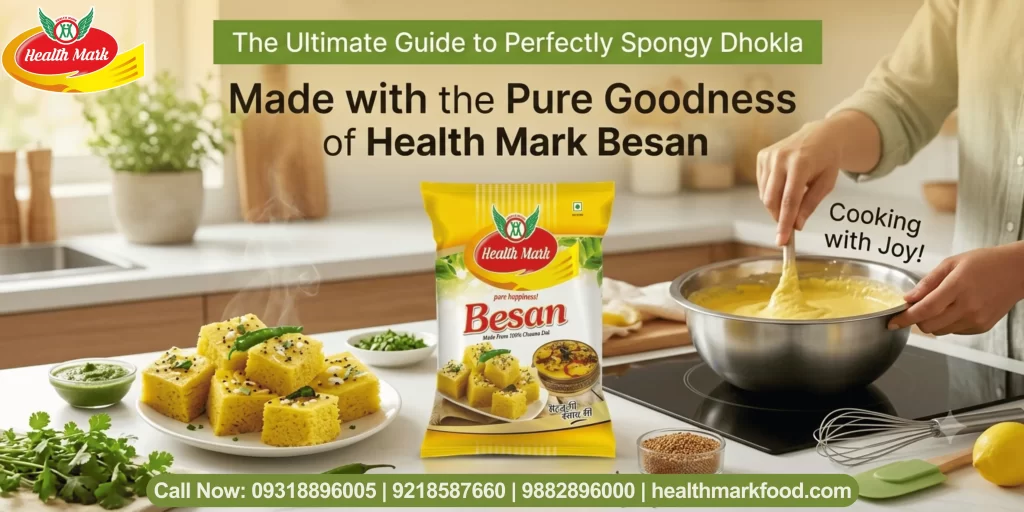
In this guide, we will settle the question once and for all: which besan is best for dhokla, how to judge premium quality besan before you buy, what makes a trustworthy besan brand in India, and how a reliable supplier like Health Mark fits into that picture. Whether you are a home cook making dhokla for the first time or a small business owner sourcing besan in bulk, this guide covers everything from texture science to price and purchasing.
What Exactly Is Besan? A Quick Refresher
Besan, also called gram flour or chana flour, is made by grinding dried, split Bengal gram (chana dal) into a fine powder. It has been a staple in Indian, Pakistani, Bangladeshi, and Middle Eastern kitchens for generations, forming the base of everything from crispy pakoras and kadhi to soft dhokla, khaman, cheela, and festive ladoos.
Unlike wheat flour, besan is naturally gluten-free, has a distinctly nutty aroma, and behaves very differently when mixed with water which is exactly why the type and quality of besan you choose has such a big impact on the final dish.
• Made from: Dried split Bengal gram (chana dal)
• Texture range: Extra-fine (bareek), regular, coarse (mota/motichur), and roasted
• Common uses: Dhokla, khaman, pakora, kadhi, cheela, ladoo, mixture/namkeen binding
• Naturally: Gluten-free, high in plant protein and dietary fiber
Why the Right Besan Makes or Breaks Your Dhokla
Dhokla is a fermented (or instant, eno-based) steamed cake, and its final texture depends on how well the batter traps air and steam. This is where besan quality becomes critical:
• Fineness controls aeration: Finely milled besan absorbs water evenly and forms a smooth, lump-free batter that traps air bubbles better during steaming, giving you a light, spongy crumb.
• Freshness affects rise: Old or improperly stored besan can develop a slightly rancid smell and weakened protein structure, which affects how well the batter rises and sets.
• Purity affects taste and safety: Adulterated or poorly processed besan can carry a bitter aftertaste, uneven colour, or impurities that no amount of tempering (tadka) can mask.
• Protein content affects structure: Good quality chana dal-based besan has enough natural protein to hold the steamed structure together without turning dense or rubbery.
In short, the difference between a dhokla that looks like it came from a Gujarati sweet shop and one that flops on the plate very often comes down to a 200-gram packet of besan.
Which Besan Is Best for Dhokla?
To put it simply: fine-grind besan is best for dhokla. Coarser or roasted besan varieties are excellent for pakoras, farsan mixtures, or thickening curries, but for dhokla you specifically want a smooth, finely milled gram flour that dissolves into water without leaving a single lump. This is also why many premium besan brands sell a dedicated “fine” or “bareek” variant alongside their regular besan it is milled specifically for delicate, steamed preparations like dhokla and khaman.
Beyond fineness, freshness matters just as much. Besan that has been sitting on a shelf for months tends to lose its aroma and can taste faintly bitter, which affects both the flavour and the rise of your dhokla. Always check the packing date and choose a brand that processes and packs in small, hygienic batches rather than buying loose besan of unknown origin.
Fine Besan vs Coarse Besan vs Roasted Besan Which One Wins for Dhokla?
Not all besan is created equal, and most kitchens actually need more than one type. Here is how the common varieties compare:
| Besan Type | Texture | Best For | Suitable for Dhokla? |
| Fine / Bareek Besan | Very smooth, powdery | Dhokla, khaman, cheela, ladoo | Yes Best Choice |
| Regular Besan | Medium-fine | General cooking, kadhi, curries | Yes Acceptable |
| Coarse / Mota / Motichur Besan | Grainy, granular | Pakora, mixture, boondi, namkeen | No Too Coarse |
| Roasted Besan | Fine but toasted | Ladoo, halwa, quick sattu-style drinks | No Alters flavour & rise |
If you only keep one type of besan at home for everyday cooking, go for a good-quality fine besan it works for dhokla, kadhi, and cheela, and can even substitute for coarse besan in a pinch. But if you cook pakoras or namkeen regularly too, it is worth keeping both a fine and a coarser variant on hand.
Things to Check Before You Buy Besan for Dhokla
Whether you are shopping in-store or trying to buy besan online, run through this checklist before adding it to your cart:
1. Colour: Look for a uniform pale yellow shade. Dull grey or overly bright yellow can indicate poor-quality dal or added colouring.
2. Texture: Rub a pinch between your fingers it should feel silky and powdery, not gritty or damp.
3. Smell: Fresh besan has a mild, nutty aroma. Any sour, musty, or rancid smell means it is stale or improperly stored.
4. Packing date: Choose the most recently packed batch available besan loses potency and flavour over time.
5. Packaging: Sealed, moisture-proof packaging protects against humidity, pests, and contamination far better than loose, open besan.
6. Ingredient purity: Check that the label lists only chana dal (100% gram flour) with no fillers or blended flours.
7. Certifications: Look for FSSAI licensing and, where available, ISO or ISI marks these indicate the manufacturer follows recognised food safety standards.
How to Identify Premium Quality Besan (Buyer’s Checklist)
“Premium best besan” is a phrase used loosely by many sellers, so it helps to know what it should actually mean in practice:
• Single-source chana dal: Made from carefully selected, cleaned Bengal gram, not a mix of low-grade pulses.
• Consistent milling: Every batch has the same fineness and colour inconsistency usually points to mixed sourcing.
• Hygienic processing: Milled and packed in a controlled, hygienic facility rather than an open, exposed setup.
• No stone-grinding grit: Traditional chakki grinding is prized for flavour, but the output should still be sieved to remove grit and husk.
• Trusted seller reputation: A brand with a track record, visible manufacturing details, and responsive customer support is generally a safer bet than an unbranded loose pack.
This is exactly the standard that a genuinely premium quality besan brand should be judged against and it is the benchmark worth using whether you are buying 200 grams for home use or sourcing in bulk for a sweet shop or restaurant.
Health Mark Besan: What Makes It a Trusted Choice
If you are looking for a best besan brand in India that ticks the boxes above, Health Mark Besan is built around exactly this standard.
Health Mark Besan is made from carefully selected chana dal, finely ground to deliver a smooth texture and rich, nutty flavour the same qualities that matter most when you are steaming a delicate batter like dhokla. It is hygienically processed and packed to preserve freshness, and is available in multiple pack sizes (55 g, 200 g, 500 g, and 1 kg), making it easy to buy just enough for a single recipe or stock up for regular use.
• Made from: Premium quality chana dal, finely milled
• Texture: Smooth and consistent well suited for dhokla, khaman, and kadhi
• Flavour: Naturally nutty, without any added colour or artificial aroma
• Packaging: Hygienically sealed to lock in freshness
• Available sizes: 55gm, 200gm, 500gm and 1kg ideal for both home kitchens and small businesses
Health Mark also offers dedicated variants under its Besan category including a finer, extra-smooth option for dishes like dhokla and khaman, and a coarser variant better suited to pakoras and mixtures so you can pick the exact texture your recipe needs instead of settling for a one-size-fits-all pack.
Households that also cook with a variety of ground spices alongside their besan-based snacks can explore Health Mark’s Spices range to complete their pantry with the same quality standards.
Step-by-Step: Perfect Dhokla Recipe Using the Right Besan
Once you have the right besan, the rest of the process is straightforward. Here is a simple, reliable method for soft, spongy dhokla:
Ingredients
• 1 cup fine besan (gram flour)
• 2 tablespoons semolina (sooji), optional, for extra sponginess
• 3/4 cup water (adjust as needed)
• 1 tablespoon curd (yogurt)
• 1 tablespoon oil, plus extra for greasing
• 1 teaspoon ginger-green chilli paste
• 1/2 teaspoon turmeric powder
• Salt to taste
• 1 teaspoon sugar
• 1 teaspoon fruit salt (eno) or 1/2 teaspoon baking soda
• For tempering: mustard seeds, curry leaves, green chillies, sesame seeds, a pinch of asafoetida, oil, and fresh coriander for garnish
Method
1. In a large bowl, whisk the besan, semolina, curd, water, ginger-green chilli paste, turmeric, salt, and sugar into a smooth, lump-free batter. Let it rest for 15–20 minutes.
2. Grease a steaming plate or thali generously with oil. Set your steamer or a wide pot with a stand and water to heat.
3. Just before steaming, sprinkle the fruit salt (eno) over the batter, add a teaspoon of water on top, and gently fold it in one direction until the batter turns light and frothy do not overmix.
4. Immediately pour the batter into the greased plate and steam on medium-high heat for 12–15 minutes, or until a toothpick inserted comes out clean.
5. Let it cool slightly, then cut into cubes or diamonds.
6. For the tempering, heat oil in a small pan, add mustard seeds, sesame seeds, curry leaves, green chillies, and a pinch of asafoetida. Once they crackle, pour this evenly over the dhokla pieces.
7. Garnish with fresh coriander and serve with green chutney.
Common Mistakes People Make When Choosing or Using Besan
• Using coarse besan for dhokla: It leaves a grainy texture and prevents the batter from rising evenly.
• Buying loose, unbranded besan: Without visible packing dates or ingredient labels, you cannot verify freshness or purity.
• Skipping the sieve step: Even fine besan can develop minor lumps during storage or transport.
• Overmixing after adding eno: This knocks the air out of the batter, resulting in a flat, dense dhokla.
• Ignoring storage: Besan left in a humid kitchen without an airtight container absorbs moisture, clumps, and spoils faster.
• Choosing price over quality: The cheapest besan on the shelf is often the coarsest or oldest stock a small price difference is rarely worth a ruined batch.
Best Besan Price in India: What Affects the Cost
Besan prices in India vary based on several factors, so “best besan price” does not always mean the lowest number on the shelf:
• Raw material quality: Besan made from cleaner, higher-grade chana dal costs more to produce than blends with broken or lower-grade pulses.
• Milling method: Stone-ground (chakki) besan and finely sieved variants generally cost slightly more than mass-milled versions.
• Pack size: Smaller packs (like 55 g or 200 g) typically have a higher per-kg price than bulk 1 kg or larger packs.
• Brand and certification: FSSAI-registered, hygienically packed products from an established manufacturer are usually priced slightly above unbranded, loose besan.
• Seasonal chana dal prices: Since besan is derived from chana dal, its cost fluctuates with the wholesale price of gram in a given season.
As a rule of thumb, treat besan pricing the same way you would any packaged staple: compare the price per 100 g across brands rather than the sticker price of the pack, and factor in freshness and hygiene, not just the number on the label.
How to Buy Besan Online in India (Top Selling Besan Guide)
If you are looking to buy besan online rather than picking it up from a local store, keep these pointers in mind:
1. Check the product description for the source (chana dal), texture (fine/coarse), and pack sizes available.
2. Look for hygienic, sealed packaging in the product photos this is a strong signal of manufacturing standards.
3. Prefer sellers who clearly list a manufacturing address, FSSAI number, and contact details, rather than anonymous storefronts.
4. Compare the top selling besan in India across a few trusted platforms to understand fair pricing before you commit to bulk quantities.
5. For repeat or bulk purchases, reach out directly to the manufacturer a direct besan seller or supplier can often offer better consistency and pricing than resellers.
Health Mark’s Besan product page lists all available pack sizes and lets you place a direct enquiry. For bulk orders or business enquiries, you can also contact the Health Mark sales team directly at +91 70825 72823, +91 92185 87660, or +91 98828 96000.
Besan Nutrition: Why It’s More Than Just a Cooking Ingredient
Besan’s popularity is not just about taste and texture it is also a genuinely nutrient-dense flour. Based on standard nutrient composition data for chickpea flour (besan), a 100-gram serving typically provides roughly:
| Nutrient | Approx. Value per 100g |
| Calories | ~380–390 kcal |
| Protein | ~21–22 g |
| Dietary Fiber | ~10–11 g |
| Fat | ~6 g (mostly unsaturated) |
| Carbohydrates | ~55–58 g |
| Iron | ~4.5–5 mg |
This makes besan a naturally gluten-free, high-protein, high-fibre alternative to refined wheat flour one of the reasons it remains popular not just in traditional recipes but also among people looking for more balanced, plant-based ingredients in everyday cooking.
Comparison Table: Best Besan Type for Different Dishes
| Dish | Recommended Besan Type | Why |
| Dhokla / Khaman | Fine / Bareek Besan | Smooth batter, better aeration, spongy texture |
| Pakora / Bhajiya | Coarse / Mota Besan | Crisper coating, better crunch |
| Kadhi | Fine or Regular Besan | Smooth, lump-free gravy |
| Ladoo / Mysore Pak | Roasted Besan | Toasted flavour and grainy-rich mouthfeel |
| Namkeen / Mixture / Boondi | Coarse / Motichur Besan | Better shape-holding and crunch |
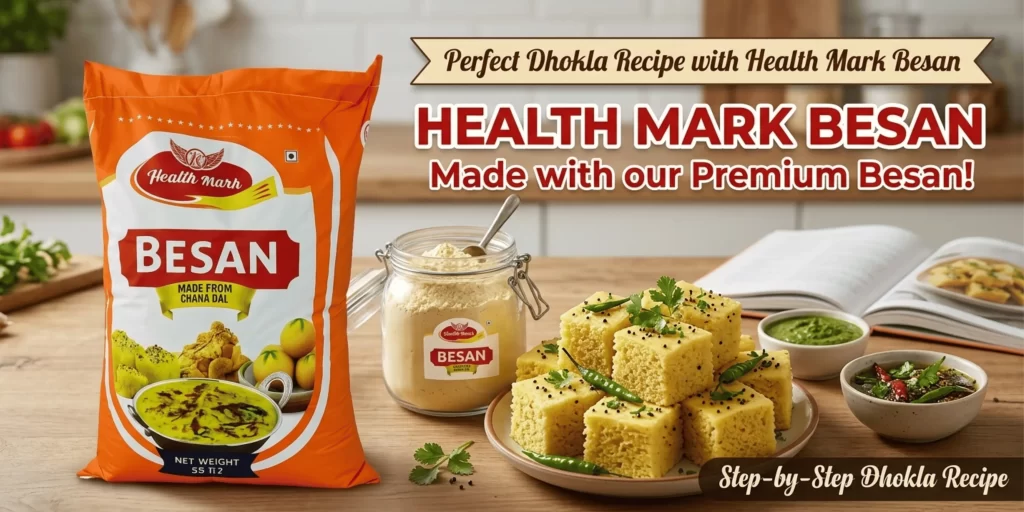
Expert Tips for Fluffy, Spongy Dhokla Every Time
• Always use fresh besan check the packing date, not just the expiry date.
• Sieve the besan before use, even if the pack claims to be extra-fine.
• Rest the batter for 15–20 minutes before steaming to let the besan hydrate fully.
• Keep your steaming water at a rolling boil before placing the batter a slow start affects the rise.
• Grease the steaming plate generously to prevent sticking and help even heat distribution.
• Store leftover besan in an airtight container, away from moisture and direct sunlight.
FAQ
Q. Which besan is best for dhokla?
A fresh, finely milled (bareek) besan made from good-quality chana dal is best for dhokla. Its smooth texture helps the batter blend evenly and trap air during steaming, giving the dhokla a soft, spongy structure.
Q. Can I use regular besan instead of fine besan for dhokla?
Yes, regular besan can work if it is reasonably fine and fresh, but it may not give quite as light a texture as a dedicated fine or bareek variant. Sieving regular besan before use helps close the gap.
Q. Why did my dhokla turn out hard or dense instead of spongy?
This usually happens due to coarse or stale besan, overmixing the batter after adding eno, an under-heated steamer, or letting the batter sit too long before steaming. Using fresh, fine besan and steaming immediately after adding eno solves most of these issues.
Q. What is the difference between besan and bareek besan?
Besan is the general term for gram flour, while bareek besan refers specifically to an extra-finely milled version. Bareek besan is smoother and better suited to delicate, steamed dishes like dhokla and khaman.
Q. Is besan good for health?
Yes. Besan is naturally gluten-free and is a good source of plant-based protein and dietary fiber, along with minerals like iron. It is commonly used as a lower-glycemic alternative to refined wheat flour in Indian cooking.
Q. How do I know if besan is of premium quality?
Look for a uniform pale yellow colour, a smooth, non-gritty texture, a mild nutty smell, clear labelling of 100% chana dal with no fillers, a recent packing date, and hygienic, sealed packaging from a brand with visible manufacturing and contact details.
Q. How should I store besan to keep it fresh longer?
Store besan in an airtight container in a cool, dry place away from direct sunlight and moisture. For longer shelf life, especially in humid climates, refrigeration is a good option.
Q. What is the best besan price range to expect in India?
Prices vary by brand, pack size, and milling quality, so it is more useful to compare the price per 100 g across a few trusted sellers rather than looking for a single fixed number. Hygienically packed, branded besan is usually priced a little higher than loose, unbranded besan, largely due to quality control and packaging.
Q. Where can I buy premium quality besan online in India?
You can buy besan online directly from established manufacturers who list clear product details, pack sizes, and contact information. Health Mark, for instance, offers premium quality besan in 55 g, 200 g, 500 g, and 1 kg packs through its official besan product page, with direct enquiry options for both retail and bulk orders.
Q. Can besan be used by people avoiding gluten?
Yes, besan is made purely from ground chana dal (Bengal gram) and is naturally gluten-free, making it a suitable flour option for people who avoid wheat-based gluten, provided it is processed in a facility that guards against cross-contamination.
Conclusion: Choosing the Best Besan for Dhokla and Beyond
So, which besan is best for dhokla? The short answer is a fresh, finely milled besan made from good-quality chana dal one that is smooth to the touch, free of lumps and grit, and packed hygienically close to the date you buy it. Get this one ingredient right, and the rest of the recipe practically takes care of itself.
Beyond dhokla, the same principles apply whether you are buying besan for pakoras, kadhi, ladoos, or everyday cooking: check the texture, check the freshness, and buy from a seller who is transparent about sourcing and processing rather than chasing the lowest price on the shelf.
If you are ready to try a premium quality besan that is made from carefully selected chana dal and packed to preserve freshness, explore Health Mark Besan or browse the full Besan range to find the right pack size for your kitchen.
Have questions or want to place a bulk order? Call or WhatsApp the Health Mark team at +91 70825 72823, +91 92185 87660, or +91 98828 96000 or visit healthmarkfood.com to explore the complete range of atta, besan, pulses, spices, and more.